


PWM Controllers Explained: Why Modern Builds Demand More Than a Relay
Let’s Get Started
For decades, automotive electrical systems have relied on a simple strategy:
Turn devices fully ON or fully OFF.
Whether controlling cooling fans, fuel pumps, water pumps, or auxiliary motors, the typical approach has been the same. A relay receives a signal, closes the circuit, and delivers 100% power to the device.
It’s simple.
It’s inexpensive.
And in many cases, it’s outdated.
Modern OEM manufacturers have largely moved away from relay-only control in favor of Pulse Width Modulation (PWM), allowing motors to operate at precisely the speed required rather than running at maximum output all the time.
The result is improved efficiency, reduced electrical load, quieter operation, and longer component life.
At Creative Werks, we’ve seen firsthand where traditional relay systems and even many aftermarket PWM controllers fall short. That’s why we developed the G2 PWM Controller—to provide a flexible, configurable solution for controlling cooling fans, fuel pumps, and other electric motors in performance vehicles.

What Is PWM?
PWM stands for Pulse Width Modulation.
Instead of supplying constant power to a motor, a PWM controller rapidly switches power on and off while varying the percentage of time the circuit remains energized.
This allows the controller to regulate motor speed more efficiently.
The concept is simple:
- Low duty cycle = lower motor speed
- Higher duty cycle = higher motor speed
- 100% duty cycle = maximum output
Rather than operating only at full power, motors can run at exactly the speed needed for current operating conditions.
Switching Frequency
One of the most overlooked aspects of motor control is switching frequency—the rate at which the controller turns power on and off to regulate motor speed.
For brushed DC motors, switching frequency can have a significant impact on motor efficiency, heat generation, noise, and long-term reliability.
When PWM frequencies are too low, the motor experiences larger current fluctuations during operation. These fluctuations can increase heat generation within the motor windings, brushes, and commutator, reducing efficiency and potentially shortening component life over time.
This becomes especially important in continuous-duty applications such as:
- Fuel pumps
- Water pumps
- Cooling fans
- Auxiliary electric motors
To address this, the G2 PWM Controller utilizes a 10 kHz switching frequency for brushed motor control.
By operating at a substantially higher frequency than many traditional motor control strategies, the G2 helps provide smoother motor operation, reduced current ripple, and lower heat generation within the motor itself.
This design philosophy was a key consideration from the beginning of the G2 development process.
Why It Matters
In the aftermarket, it’s common to see brushed motors controlled using lower-frequency PWM signals originally intended for other applications. While these strategies may successfully vary motor speed, they can also introduce unnecessary stress into the system.
For example, many engine management systems provide PWM outputs around 100 Hz, which are ideal for controlling brushless fan commands but may not be optimized for directly driving high-current brushed motors such as fuel pumps or cooling fans.
The G2 bridges that gap.
It can accept lower-frequency control inputs from an ECU while internally generating a high-frequency 10 kHz output optimized for brushed motor operation. This allows builders to maintain ECU integration while delivering a cleaner, more motor-friendly control signal to the device itself.

The Problem With Relay-Controlled Systems
Relay-based systems are common because they’re inexpensive and easy to install.
Unfortunately, they create several challenges that become more apparent as vehicle performance increases.
High Startup Current
Electric motors draw their highest current during startup.
Every time a relay activates a cooling fan or fuel pump, the motor experiences a significant inrush current event.
These spikes can contribute to:
- Voltage drops
- Headlight dimming
- Increased alternator load
- Additional stress on wiring and connectors
- Reduced relay life
Full Speed When It’s Not Needed
Relays only know two commands:
- OFF
- FULL POWER
This means devices operate at maximum output even when only a fraction of their capacity is required.
Electrical System Instability
As more accessories are added to modern vehicles, managing current draw becomes increasingly important.
Large motors cycling on and off can create unnecessary fluctuations throughout the electrical system.
Why PWM Changes Everything
PWM allows motors to operate proportionally rather than simply turning on and off.
Instead of waiting for coolant temperatures to rise before activating a fan at 100%, airflow can gradually increase as cooling demand changes.
Likewise, instead of operating a fuel pump at full speed continuously, pump output can be adjusted to match engine demand.
The benefits include:
- Reduced current spikes
- More stable electrical systems
- Lower average current draw
- Reduced heat generation
- Less noise
- Longer motor life
- More precise control

Cooling Fans: The Most Common PWM Application
Cooling fans are often the first component builders convert to PWM control.
Traditional fan relays create temperature swings by allowing coolant temperatures to rise above a threshold before activating full fan speed.
The cycle repeats continuously:
Temperature rises.
Fan turns on.
Temperature drops.
Fan turns off.
PWM eliminates this behavior by gradually increasing fan speed as cooling demand increases.
Benefits include:
- More stable coolant temperatures
- Reduced fan noise
- Lower average current draw
- Less strain on charging systems
- Improved fan longevity
For street vehicles, race cars, off-road builds, and engine swaps, PWM cooling strategies often deliver a noticeable improvement in overall system performance.
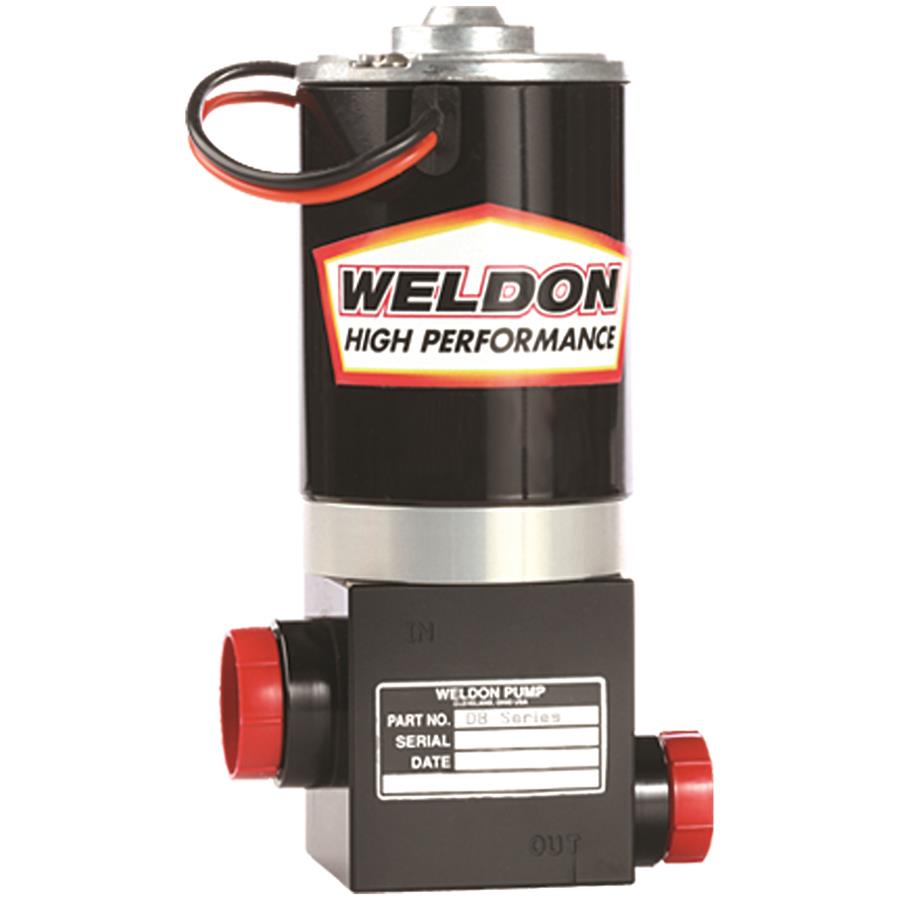
Fuel Pumps: Where PWM Provides Even Greater Benefits
Fuel pumps are often overlooked when discussing PWM control.
Yet they can benefit just as much—if not more—than cooling fans.
Many high-performance fuel systems run pumps at 100% duty cycle continuously, regardless of actual engine demand.
At idle or cruising conditions, this means the pump is moving significantly more fuel than necessary.
The result is:
- Excess heat in the fuel
- Increased pump wear
- Higher current consumption
- Additional strain on charging systems
PWM control allows fuel pump speed to match engine requirements.
At idle and cruise, the pump can operate at reduced output.
As load increases, pump speed increases accordingly.
Benefits include:
Cooler Fuel Temperatures
Reducing unnecessary fuel circulation helps minimize heat buildup within the fuel system.
Extended Pump Life
Running pumps at lower duty cycles during normal driving reduces wear on internal components.
Reduced Electrical Load
Fuel pumps can be among the largest continuous electrical loads in a vehicle.
PWM helps reduce average current consumption while maintaining required fuel delivery.
Quieter Operation
Many high-performance pumps produce significant noise when operated continuously at full speed.
PWM control can substantially reduce pump noise during normal driving conditions.
The Problem With Many Aftermarket PWM Controllers
While PWM technology isn’t new, many aftermarket solutions still present limitations.
Common issues include:
- Designed only for brushed motors
- Designed only for brushless motors
- Limited ECU integration
- Fixed operating strategies
- Minimal diagnostics
- Limited configuration options
Builders are often forced to compromise their system design around the controller rather than the other way around.


Why We Built the G2 PWM Controller
The G2 was developed to solve these real-world challenges.
Instead of creating another fan controller, we built a configurable motor control platform designed for modern performance vehicles.
Supports Brushed and Brushless Motors
The G2 supports both technologies, allowing users to control a wide variety of cooling fans, pumps, and motors from a single platform.
Standalone or ECU Controlled
Whether you’re running a carbureted street rod or a modern standalone ECU, the G2 can integrate into your preferred strategy.
It can operate independently using sensor inputs or accept PWM commands directly from the ECU.
Smart Fuse Technology
Programmable protection features help safeguard connected devices while providing greater flexibility than traditional fuse-and-relay systems. with a max continuous output of 80amps and safety limited to 90 amps in-rush the G2 provides flexibility for a variety of applications.
CAN Communication
Modern vehicles demand modern communication.
The G2 incorporates CAN functionality for advanced integration opportunities. Push the latest config, bootload the newest features and more all straight from one connection.

Fully Configurable Software
No two vehicles are exactly alike.
A street-driven muscle car, a drag-and-drive build, an Ultra4 truck, and a dedicated race car all have vastly different cooling and fuel delivery requirements. Yet many controllers on the market force users into a limited set of predefined operating strategies.
The G2 was designed with flexibility in mind.
Using the G2 Configuration Software, users gain complete visibility into how the controller operates and the ability to tailor its behavior to their specific application.
Rather than relying on a one-size-fits-all solution, builders can configure the system to match their vehicle, components, and performance goals.
Depending on the application, users can:
- Configure cooling fan operating strategies
- Customize fuel pump control behavior
- Set temperature-based activation points
- Define PWM output curves and ramp rates
- Configure analog and digital inputs
- Establish fail-safe and protection strategies
- Monitor real-time system activity
- Fine-tune performance without replacing hardware
This level of control allows builders to optimize their system for everything from daily-driven vehicles to high-horsepower race applications.
For example, a cooling fan can be programmed to gradually increase speed as coolant temperature rises, maintaining stable temperatures while minimizing electrical load and fan noise.
Likewise, a fuel pump can be configured to operate at reduced speed during idle and cruising conditions before increasing output under higher engine demand, reducing pump wear and unnecessary heat generation.
The software also provides valuable insight into system operation, allowing users to verify inputs, monitor outputs, and troubleshoot issues more effectively than traditional relay-based systems.
Perhaps most importantly, the controller can evolve with the vehicle.
As components change, horsepower increases, or operating requirements shift, users can simply update their configuration rather than purchasing an entirely new control solution.
Most controllers are purchased for a specific project. The G2 is designed to stay with the vehicle as the project evolves.
Change fans. Upgrade pumps. Switch ECUs. Add CAN integration. Adjust strategies. The G2 provides the flexibility to grow alongside your build rather than becoming another component that needs to be replaced.
One Controller. Multiple Applications.
The reality is that cooling fans and fuel pumps face many of the same challenges:
- Excessive startup current
- Unnecessary full-speed operation
- Increased component wear
- Electrical system stress
PWM solves these issues by providing precise motor control.
Whether you’re managing engine temperature, fuel delivery, or another electrically driven system, the goal is the same:
Deliver only the amount of output required, exactly when it’s needed.
That’s the philosophy behind the G2 PWM Controller—a flexible, intelligent motor control solution built to bring OEM-level control strategies to the aftermarket.